Why Ecotile wins in Asian industrial sales
Use these talking points with operations, engineering, and finance stakeholders.
Operational uptime
- No curing—install while production continues.
- Loose‑lay over worn concrete; minimal prep.
- Replace a tile in minutes after impact or oil damage.
Safety & 5S
- Slip‑resistant R10 surfaces; colour‑coded walkways.
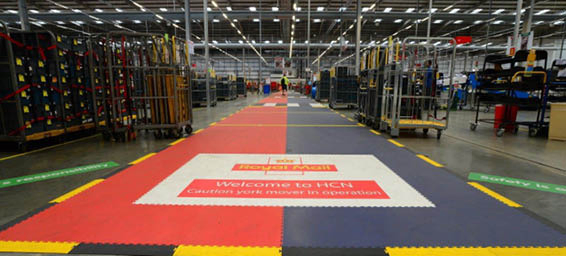
- Logo/safety tiles for visual management.
- Comfort layer reduces fatigue on long shifts.
Financial logic
- Lower lifecycle cost than epoxy/Kota stone.
- Capex saved on subfloor rehab & damp proofing.
- Buy‑back + recyclability strengthens ESG score.
*Indicative—validate with your project ROI calculator below.
Where it wins (priority sectors)
Start here in APAC/MENA: short sales cycles, visible pain, and clear ROI.
Warehousing & 3PL
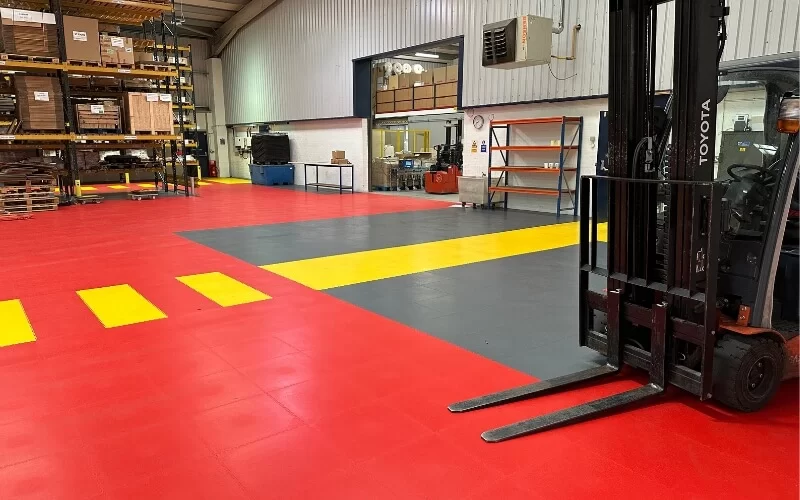
- Fix pitted dusting concrete without shutting depots.
- Walkways & dock zones in high‑visibility colours.
- Handles forklifts/HGV traffic (7mm/10mm).
Manufacturing (Light/Gen)
- Oil/chemical resistant; easy clean.
- Zoning for lean/Kaizen cells.
- Move/reuse tiles during line re‑layouts.
Electronics / ESD
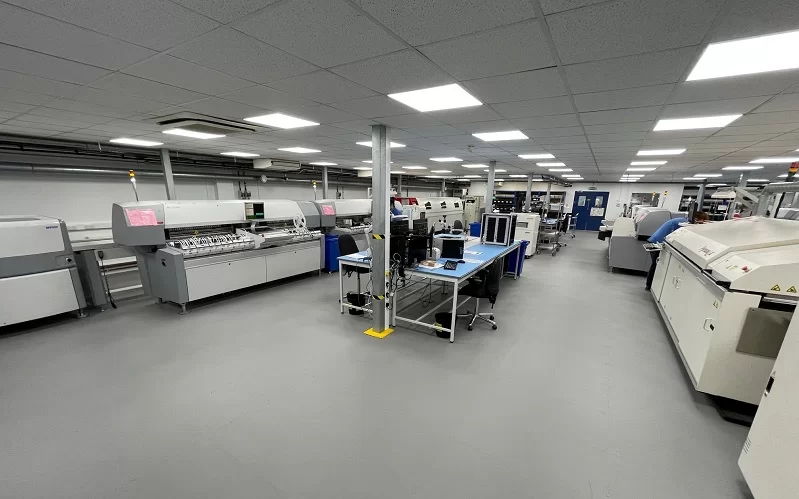
- Static dissipative & conductive options.
- Tested to industry ESD ranges; grounding kits.
- Swap single tile to restore compliance.
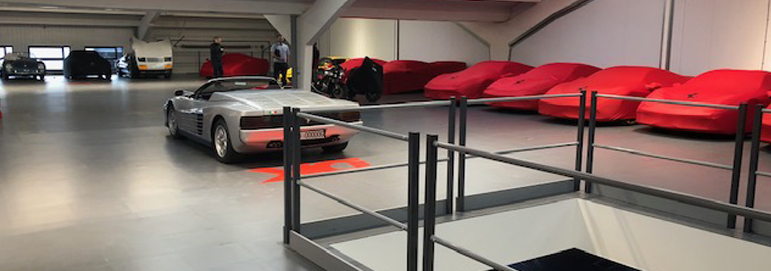
Automotive workshops
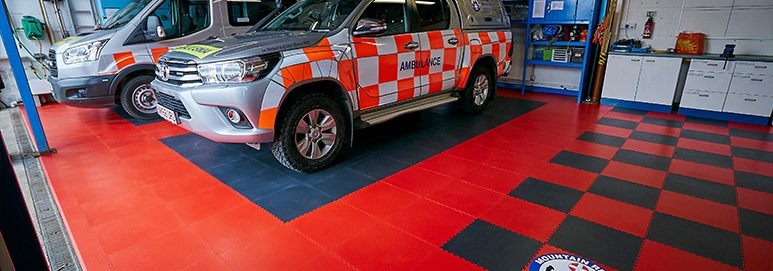
- Warm underfoot; hides tyre staining in Graphite.
- Withstands jacks, axle stands & hot spots.
- Front‑of‑house finish with logo tiles.
AGV/AMR robot‑ready options
7mm & 10mm heavy‑duty tiles
Logo & safety signage tiles
Quick comparison: Ecotile vs Epoxy, Kota stone, Vinyl roll
Use this at first meeting to reframe value around downtime, risk, and lifecycle cost.
| Criteria | Ecotile (7/10mm) | Epoxy | Kota Stone | Vinyl Roll |
|---|---|---|---|---|
| Install & Downtime | Loose‑lay, minimal prep; operate during install | Surface rehab + curing time; shutdowns common | Wet works, cutting/setting; dusty & disruptive | Adhesive set & seams; often area closures |
| Moisture / Damp tolerance | No DPM typically needed; vents moisture | Fails/bubbles on damp slabs | OK when subfloor dry & prepared | Adhesive issues on damp; seam lift |
| Repairability | Swap a tile in minutes | Patch & recoat sections; cure again | Stone replacement & polish | Cut & heat‑weld patches |
| ESD / Specialist options | Static‑dissipative & conductive ranges | Specialist epoxy variants available | Not typical | Limited; sheet ESD exists but harder to repair |
| Lifecycle cost | Low—reusable, modular, low maintenance | Medium/High—recoat cycles | Medium—repairs & polishing | Medium—seam & adhesive failures |
| Look & Branding | Colour zones; logo/safety tiles | Painted zones; can scuff | Limited colour control | Printed options; seam lines visible |
How to sell Ecotile (field‑proven flow)
Most wins happen when reps run a tight discovery, show a sample, and quantify downtime risk.
1) Pre‑call Intel
- Identify pain: dusting concrete, epoxy failure, damp, safety incidents.
- Map stakeholders: Ops + EHS + Engineering + Finance + Procurement.
- Book a 15‑min virtual to qualify before site visit.
2) Discovery (virtual)
- Show 2‑min explainer + case photos (below).
- Confirm downtime cost/hr and shift schedule.
- Agree next step: site survey & sample demo.
3) Site Survey (physical)
- Check moisture, surface soundness, level & cracks.
- Traffic: forklifts, point loads, turning areas.
- Agree colour zoning & logo placements.
4) Solution & Quote
- Tile choice (7 vs 10mm; ESD vs Standard; Anti‑fatigue).
- Phased install plan to avoid shutdowns.
- Show ROI vs epoxy/Kota with downtime saved.
5) Pilot Area
- Lay 10–50 m² in worst area; monitor 2–4 weeks.
- Use as live showroom for internal buy‑in.
- Capture ops feedback & HSE observations.
6) Close & Expand
- Close on phased implementation schedule.
- Upsell: safety signage, ramps, logos, AGV‑ready.
- Book quarterly floor review; plan expansions.
Technical sales essentials
Arm engineers with the facts. Keep it simple; reference detailed datasheets when needed.
Tile selection
- 7mm E500 – most industrial/warehouse use.
- 10mm Ultra Heavy Duty – extreme point loads/HGV turning.
- ESD (X‑joint & T‑joint) – IEC‑aligned dissipative/conductive ranges.
- Anti‑fatigue – comfort layer for long standing tasks.
Performance highlights
- Slip resistance: R10.
- Fire: Bfl‑S1 (low smoke, suitable for industrial interiors).
- Chemicals: resistant to oils, fuels, common acids/alkalis.
- Thermal & acoustic insulation improves worker comfort.
Subfloor & moisture
- Installs over imperfect concrete, asphalt, resin, tiles.
- No DPM or screed typically required; vents moisture.
- Adhere near heat sources or strong sunlight (workshops).
ESD in one minute
- Tiles embed stainless‑steel microfibres to dissipate charge.
- Studded tiles every ~60 m² connect to earth via bonding plug.
- Swap damaged tile to restore compliance fast.
Commercial sales plays
Position around downtime avoided, risk removed, and future flexibility.
Executive ROI story
- Downtime saved vs epoxy/stone is the #1 driver.
- Capex relief: minimal floor rehab + reusable asset.
- ESG: recyclable & buy‑back scheme.
Deal Structure
- Phased installs: bay‑by‑bay over nights/weekends.
- Pilot → roll‑out with volume pricing.
- Bundle signage, ramps, logo tiles.
Stakeholder map
- Ops/EHS: safety, dust, slip risk, fatigue.
- Engineering: point loads, ESD, layouts.
- Finance/Proc: ROI, warranty, vendor risk.
Objection handling (fast rebuttals)
Cost vs epoxy/Kota
- “Unit price is higher.” → Total cost isn’t. You avoid slab rehab, DPM, curing, and shutdown. Add downtime cost to your quote; Ecotile usually wins on lifecycle.
- “We can’t stop production.” → We install live—zone by zone—no curing. Swap single tiles later if damaged.
Durability & traffic
- “Forklifts will chew it.” → 7/10mm tiles specified for heavy traffic. Reference logistics & OEM case studies.
- “Chemicals/oil?” → PVC resists oils and common chemicals; individual tiles are replaceable if needed.
ESD concerns
- “Will it stay compliant?” → ESD fibres are through‑tile; performance is stable. Replace a single tile to restore continuity.
- “Vinyl ESD is cheaper.” → True on material; false on downtime + repair risk. Ecotile wins in leased or live sites.
Aesthetics & brand
- Graphite hides tyre stains; use bright colours only in walkways.
- Embed logos & safety icons for client branding and HSE.
Site meeting checklist (print‑ready)
Subfloor: dusting, spalling, cracks, moisture, level variances, repairs done?
Traffic: forklifts (type/tyres), AGV/AMR, turning points, static loads, pallet trucks.
Environment: temperature swings, direct sun/heat, oils/chemicals, wet areas.
ESD: EPA size, bonding points, resistance targets, test regime & logs.
Zoning: walkways, workcells, hazards, logo tiles, ramps/edges.
Phasing: areas, shift calendar, install windows, material staging.
Handover: cleaning plan, spare tiles %, warranty, review cadence.
ROI & pricing mini‑model
Drop in rough numbers during the meeting; send full model after survey.
Inputs
- Area (m²), average labour cost/hr, throughput cost/hr, install window per day.
- Epoxy/Kota shutdown days vs Ecotile live‑install days.
- Maintenance cycles: epoxy recoats; stone polishing; vinyl seam repairs.
Output story
- Downtime avoided (₹ / $) is the main delta.
- Capex saved (no DPM/screed) + reuse value on moves.
- Payback often within the first recoat the client didn’t need.
Compliance snapshot (surface‑level)
Quality & Environment
- Manufactured in ISO‑certified UK facility (ISO9001 & ISO14001 practices).
- Tiles 100% recyclable; buy‑back scheme available.
Fire & Slip
- Fire classification: Bfl‑S1.
- Slip resistance: R10 (typical industrial requirement).
ESD
- Static dissipative and conductive systems with grounding kits.
- Provide commissioning tests & certificate where required.
Assets & links
Case studies
Logistics, manufacturing, workshops, retail.
ESD product pageSpecs, resistance ranges, grounding details.
All productsTiles, ramps, signage & accessories.
Preferred close: pilot + phased install + logo/safety tiles bundle.
Book a Free Site Survey